AI · Field Notes
AI Is a Multiplier, Not an Equalizer
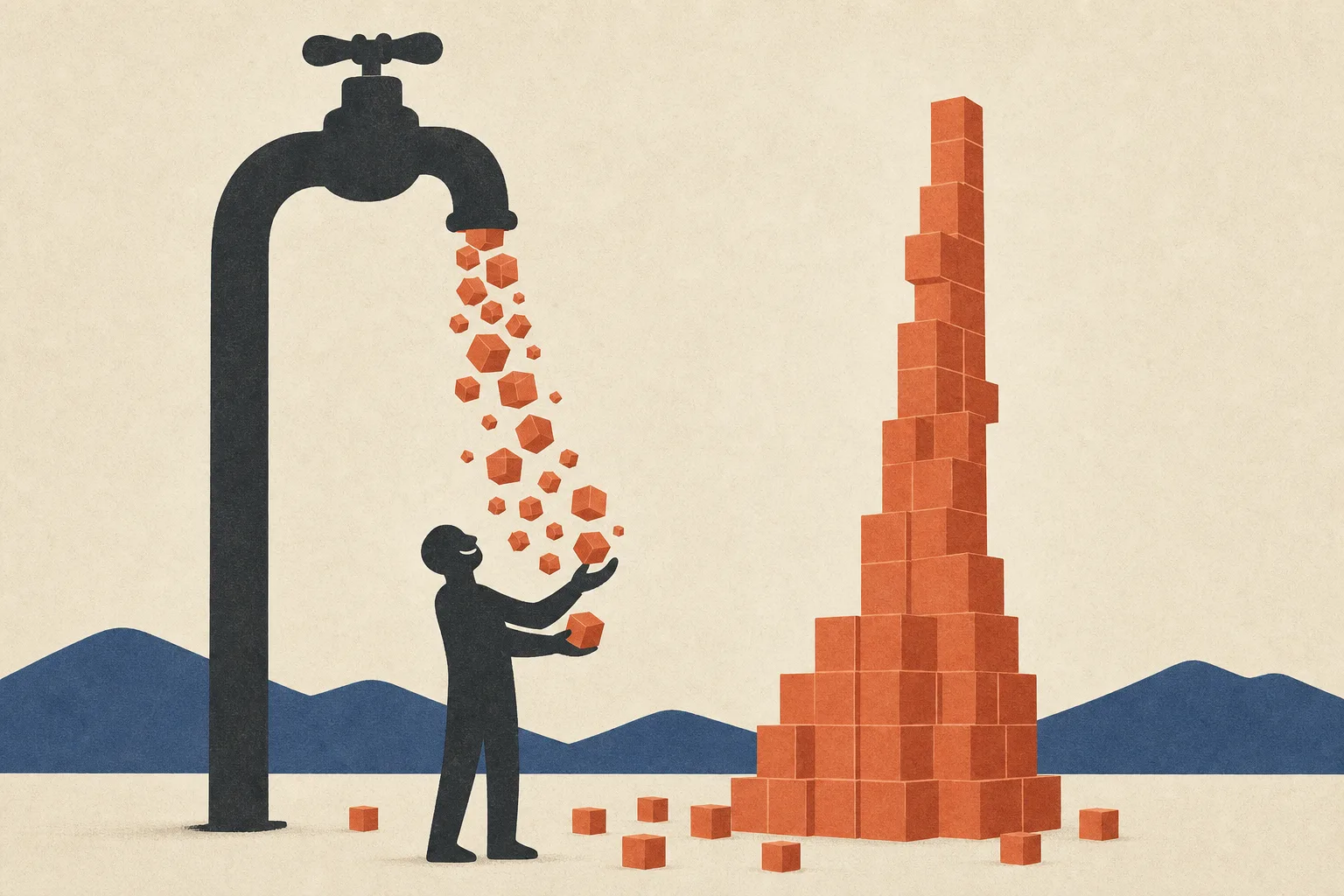
Everyone hoped AI would let you skip the hard part - understanding the problem. It does the opposite. It multiplies whatever clarity you bring, and if you bring none, it just makes your confusion sound more convincing.

A few people have started calling me an AI whisperer. It sounds like a magic trick. It's the least magical thing I do.
I've been building software for twenty-five years. Somewhere in there I picked up a skill that never shows up on a CV: taking a vague, half-specified task and turning it into something crisp enough to actually build. The typing was never the hard part. The hard part was working out what the thing was really supposed to do, and saying it clearly enough that someone else could do it without reading my mind.
That turns out to be the entire trick with AI. I can get a model to do what I want because I spent years learning to be precise - to know what I don't know, and to refuse to move on while I still don't understand something. The model is a fast executor and nothing more. Give it a clear instruction and it flies. Give it a fuzzy one and it will build the wrong thing, fast and with total confidence.
ClickHouse's engineering team said the general version of this out loud, after a year of building with agents: it's a multiplier - strong engineers get sharper, weaker ones cause more damage, and there's no shortcut around understanding the problem. That last clause is the whole game. AI is not a way around understanding. It's a way to move faster once you have it.
AI doesn't fix a vague idea. It makes it sound more convincing while leaving it exactly as wrong.
This is why the same tool multiplies one person and sinks another. For twenty-five years the executor on the other end of my instructions was another developer. Now it's a model. A clear specifier pointed at a fast executor was always powerful - the executor just got faster, cheaper, and tireless. If you already knew how to say precisely what you wanted, you got a force multiplier. If you didn't, you got a quicker way to produce confident nonsense.
And this isn't only about developers. A project manager can use AI as a multiplier too - but only from the understanding side. Use AI to write your requirements and you still have to understand the requirement. What you can't do is hide behind it. "The AI said so" is not understanding; it's the old shrug in a better suit. If you were used to never quite grasping what you were asking for - quietly hoping the developers would work out what you meant - AI doesn't fix that. It dresses a poorly-thought-out requirement in fluent, plausible language. Same bad requirement. Better packaging. Arguably more dangerous, because now it survives the meeting.
So no, AI doesn't close the gap between people who understand their problem and people who don't. It widens it. The ones who did the unglamorous work - knowing their domain, being honest about what they don't know - get sharper. The ones who hoped to skip that work get a louder, more convincing version of the muddle they already had.
Which is the part the spend-as-little-as-possible crowd keeps missing. The thing worth investing in was never the tool. It's the understanding the tool multiplies. You can rent the executor by the token now. You still can't rent knowing what you actually want.