AI · Field Notes
The Execute Step Is Disappearing
AI didn't replace engineers. It hollowed out the middle of the job - the typing - and made the two ends that were always the real work matter more than ever.
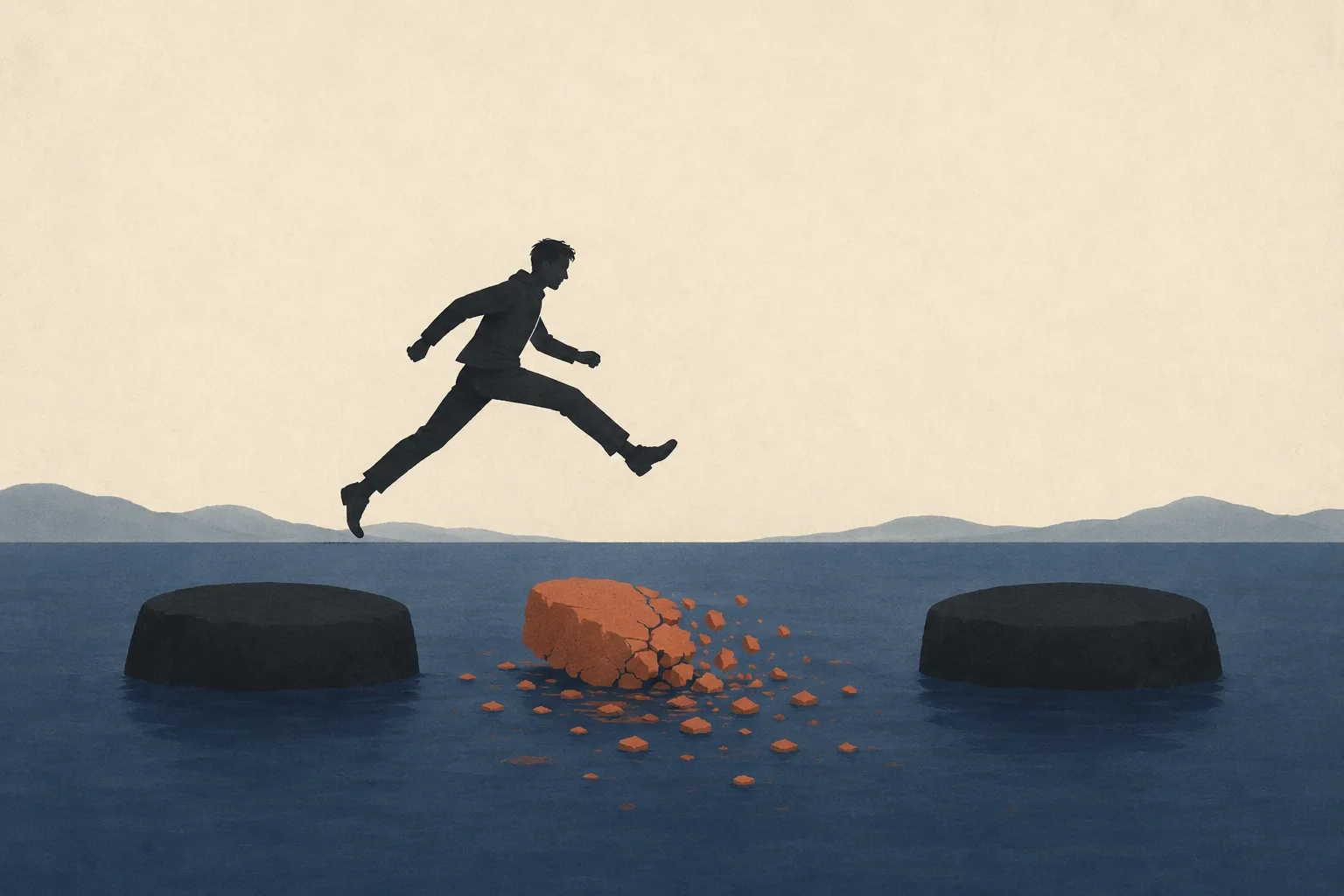
Every knowledge job is really three jobs stacked on top of each other.
You decide what to do. You execute it. You deliver the result - get it shipped, accountable, integrated into the messy real world. Decide, execute, deliver. Writing software is the same sandwich: figure out what to build, write the code, get it into production without breaking everything.
For my whole career, the middle layer - the execution, the actual typing - was most of the visible work and most of what we got paid for. That's the part AI just ate.
I'm not speaking in the future tense. In the last few weeks the clips have been everywhere: "within hours, AI tools can now complete tasks that once took engineers days." That's not hype - it roughly matches my week. Things that used to be an afternoon of careful typing are now a paragraph of instruction and a review. The execute step is collapsing toward zero.
Why this is not the same as "AI replaced engineers"
Here's the part the headlines flatten. A job losing its middle is not the same as a job disappearing. The same month the "days into hours" clips went viral, a quieter argument made the rounds among people who actually ship: AI hasn't replaced software engineers, and won't - because execution was never the whole job. The framing I keep coming back to is that decide-execute-deliver sandwich. AI is extremely good at the filling. It is still bad at the bread.
Deciding what to build is taste, context, judgment - knowing which of the ten things worth doing is the one to build, and what "done" even means. Delivering is the unglamorous gauntlet: integrating with the system nobody fully understands, owning it when it breaks at 2am, being the human who is accountable. Neither of those is a typing problem, and typing is what got faster.
AI is extremely good at the filling. It is still bad at the bread.
The job didn't get easier. It got heavier at both ends.
Here's what nobody warns you about. When the middle collapses, the two ends don't shrink to match - they expand to fill the time, and they get more demanding. If I can execute ten times faster, the bottleneck moves entirely onto deciding the right thing and delivering it well. I spend less time typing and far more time on the two hardest, least teachable parts of the work.
That's great news if you were always good at those parts - the people who had taste and ownership and just wished the typing went faster. It's uncomfortable news if execution was your moat. The engineer valued for cranking out code to spec is having their core skill commoditized. The engineer valued for knowing what to build and getting it to land just got a massive force multiplier.
This is what the disruption actually looks like, and it's subtler than "robots take the jobs." The jobs don't vanish. They get hollowed in the middle and reweighted toward the ends. The skills that survive are the ones we were always a bit vague about teaching, because they live in judgment and accountability rather than syntax.
I keep thinking about the junior version of me, who got good by typing a thousand things badly until some of them were good. I don't fully know how you build judgment when the typing is done for you - that's the open question this leaves me with, and I don't think anyone has answered it yet. But I'm sure of the direction. The execute step is disappearing. What it leaves behind is a job that's smaller in the middle and much bigger at both ends - and, for the people who like the hard parts, more interesting than it's ever been.