AI · Field Notes
Kaizen for Robots
An AI does the SEO for one of my sites on its own. This morning it nearly fooled me with the wrong number.

The first thing I did this morning, before the coffee had properly landed, was ask my agents how they'd done overnight. Not metaphorically. I have a couple of them running now, and checking on them has quietly become a habit - like glancing at something you left on low heat.
One came back with a headline number that had roughly halved since yesterday. That's the kind of thing that makes you put the mug down.
Here's what these agents actually do. They run the slow, unglamorous craft of SEO - getting a website to show up when someone searches Google for the thing it does. For audio-utils.com, a free set of audio tools I run - convert between formats like MP3, WAV and FLAC, join clips together, normalise a track's loudness for streaming, or read off its tempo and musical key - that means being the site that appears when someone types "wav to mp3" or "find the key of a song". It's normally endless human work: better wording, faster pages, clearer descriptions, one small fix at a time.
So I automated it, using an approach we lean on at Kerta called Kaizen - the Japanese factory-floor idea of continuous improvement. Not big rewrites or heroics; a steady drip of tiny, reversible changes that compound. The agent wakes on a timer, reads the site's real numbers, makes one small improvement, and logs what it did. It runs on a small computer in my house and costs nothing to keep alive.
The hard part was never making it clever - the models are already clever. The hard part is trusting something to improve a real website unattended. So most of the work went into the leash. It has a rulebook it isn't allowed to edit: never slow a page past a hard floor, never invent a number, never push anything live on its own. It drafts and stages its improvements automatically; I'm the one who approves what actually ships. Broad freedom inside the walls, no way to move the walls. I've started calling the pattern guardrailed autonomy.
Which brings me back to the number that halved. That figure is the agent's own headline metric, a score it blends together to grade itself. So I did the thing the whole system is built to make easy - I went and checked the source of truth, Google's own Search Console. The halving was nothing. At that size the number just jumps around; a quiet week and a good week look identical through that lens.
Then I looked at what actually mattered. Real Google clicks last month: two. Not a typo - two. But the numbers underneath were moving the right way. We'd surfaced in someone's search results 170 times, up from a trickle to a steady dozen a day. And the site's average position had climbed out of the mid-50s and into the 20s over the past week. It's ranking higher. Nobody's clicked yet - but it's rising toward the point where they will.
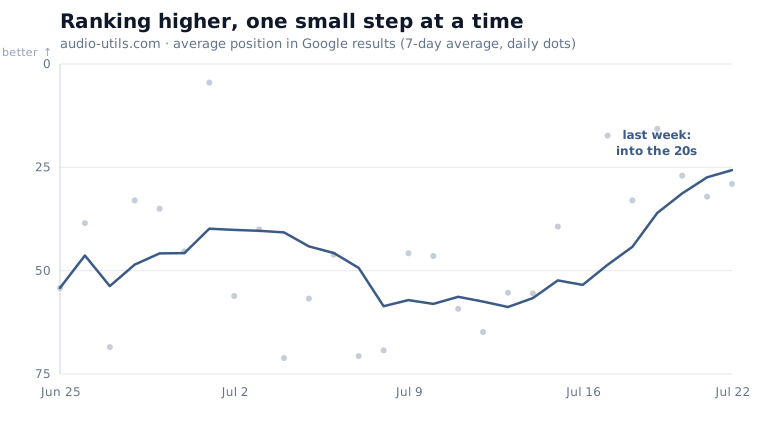
The alarming number meant nothing. The quiet one meant everything.
That gap is the thing I keep relearning about automated AI. Give a capable agent a job and walk away, and the intelligence isn't the bottleneck - knowing what to point it at is. An agent chasing a number it made up will happily drive it up while the real thing sits still, which is exactly why "never fake a metric" is a rule it can't touch. Kaizen only works if the small daily wins are real ones.