AI · Field Notes
The Skill Moved From the Code to the Harness
I spent a month having a model build things I could never build alone - a fighting game in Unreal, a dictation app from scratch. What I was actually doing wasn't coding. It was building the harness it works inside.
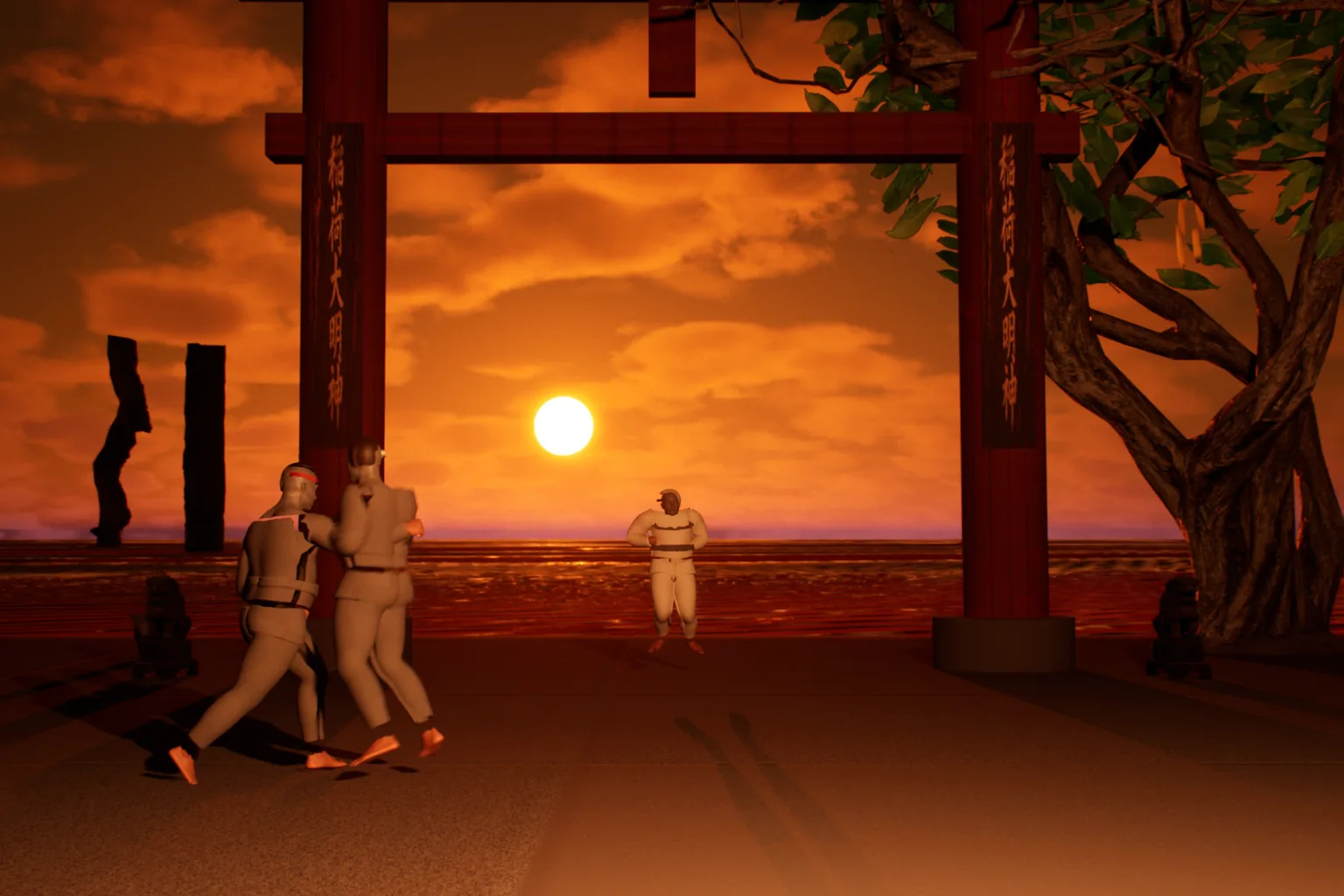
I have barely written any code this month. I've done something that sits right next to it and turns out to be a different job entirely: building the harness around a model and pointing it at things I have no business attempting.
Two projects. The first is a clone of Wispr Flow, the little dictation app that turns your voice into text anywhere on your machine, rebuilt as a native Mac and Windows client. It's done. It works. I'll publish it shortly. The second was greedier: I set out to remake International Karate+, the 1987 fighting game I grew up on, inside Unreal Engine 5 - a real 3D game, not a toy - and I never once opened Unreal. I sat at this laptop and talked to Claude, which drove the editor on a Windows box in the next room through MCP, the wiring that lets a model operate real software instead of just describing it.
That word - harness - is the one worth explaining. A model on its own answers questions. A harness is everything you build around it so it can act instead: the context you feed it, the tools you let it reach, the permissions you grant, the checks that tell it whether what it did actually worked. Building that scaffolding, not typing the code inside it, is where my month actually went.
The karate game is the more honest story, because it stalled. Most of it looked genuinely good - it caught the atmosphere and the small details of the original, and it went from me never having made a single thing in Unreal to a rudimentary, playable version of an epic game. But it ran out of road in two places, and neither was the coding. One was compute: the Windows box simply didn't have the resources to reliably carry a full Unreal game. The other was craft - I ran out of patience with the skeleton, the bones, getting the mannequin to move like a person instead of a puppet. The model wrote the Unreal glue by the thousand lines without complaint. It couldn't hand me a bigger machine, and it couldn't yet stand in for the hard, physical problem of making a body move right.
The industry has started naming this. People call it harness engineering - the idea that agents get reliable not from a smarter model but from better context, skills, permissions and verification around them - and the tools are following: this month OpenAI folded its coding agent into a desktop app that runs agents in parallel, out of the terminal entirely. It matches what I felt all month. The intelligence was rarely the bottleneck. The harness was the work, and the walls were the things no harness reaches: the machine you're on, and the problems that aren't really code.
The model wrote the code fine. Where it stalled was everything that wasn't code.
The two projects sort cleanly along that line. Wispr Flow was well-scoped and sat entirely inside what a good harness can do, so it's finished and shipping. The karate game was too big for one box and leaned on craft the model can't yet replace, so what I have is a playable proof and a maybe-later.